

What a contractor website must have to win the job.
A contractor website must do one job: turn an interested visitor into a conversation. That requires real project proof organized by the work you want, project stories that answer buyer questions, a clear service area, fast pages that work on a phone, and an obvious way to reach you. Everything else is optional.
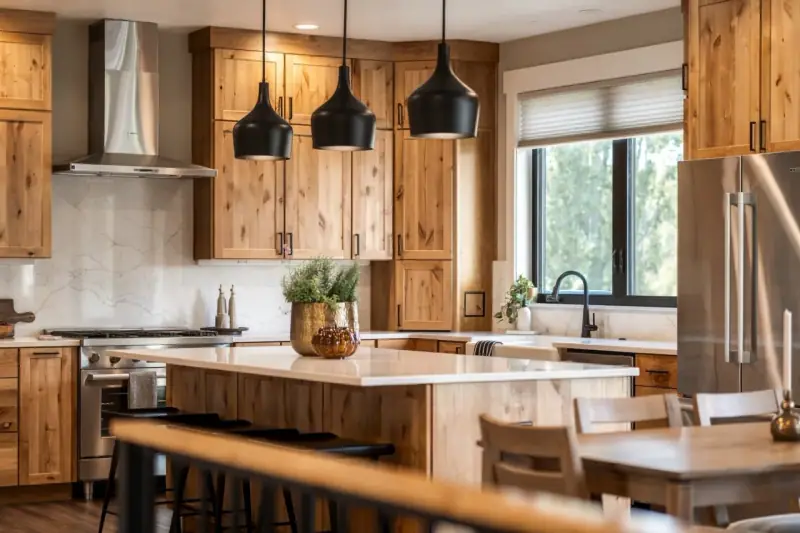
Your website is your first interview.
Before a buyer calls, before they email, before they ask a friend about you, they look at your website. It is the first interview, and it happens without you in the room. What they find there decides whether the conversation ever starts.
This is true even for referrals. Maybe especially for referrals. A strong recommendation gets you looked up. What the buyer finds next either confirms the recommendation or quietly kills it.
Real project proof, organized by the work you want.
The single most important thing on a contractor website is real proof of real work. Not stock photos. Not renderings. Your projects, photographed and filmed properly, organized so a buyer can find the kind of work they are planning.
Organization matters as much as quality. A custom home buyer should not have to dig through commercial work to find what they need. Structure the portfolio around the work you want more of, and the right buyers will see themselves in it.
Project stories, not just a gallery.
A gallery shows what you built. A project story shows how you think. The challenge on the site, the approach you took, the details you held the line on, the result. That narrative is what separates a builder from a photo album.
Buyers planning a serious project want to know how you handle problems, because every project has them. The story of a difficult lot handled well builds more trust than a hundred perfect photos.
A contractor website must do one job: turn an interested visitor into a conversation.
A clear service area.
Buyers want to know you work where they are building. A clear statement of the places you serve, backed by real projects in those places, answers a question every visitor has and most contractor sites never address.
In Montana this matters doubly. The state is huge, conditions vary by region, and buyers know it. A builder who shows real work in the Bitterroot, the Flathead, or the Gallatin proves local knowledge that a generic site cannot fake.
A process page that lowers the perceived risk.
Hiring a contractor feels risky to a buyer. A clear explanation of how you work, from first conversation through completion, lowers that risk before the first meeting. What happens when, who they talk to, how decisions get made, how you handle change.
This page does more selling than any testimonial. It tells the buyer you have done this enough times to have a process, and that they will not be figuring it out as they go.
Fast, mobile first, and easy to contact.
Most buyers will see your site on a phone, often on a jobsite or from a kitchen table in the evening. If it loads slowly, if the text is tiny, if the contact button is buried, you lose them. Speed and mobile experience are not technical details. They are first impressions.
And when they are ready to reach out, make it obvious. One clear action, visible on every page. Start the conversation. Nothing clever, nothing hidden.
Built to be found in your towns.
A website that cannot be found only serves people who already know you. Pages that speak specifically about the work you do and the places you do it earn search visibility over time, which is how the buyers you do not know yet find you.
This is not about tricks. It is about specificity. Real pages about real services in real places, written like someone who has actually done the work there.
Trust signals that are actually yours.
Licensing, insurance, real projects, real people, real places. The trust signals that matter are the ones a buyer can verify. Skip the badge collections and the vague superlatives. Show the work, name the places, introduce the crew.
Buyers in the trades are professional skeptics. They have been burned before. Every verifiable detail you provide is one less reason to hesitate.
What to leave out.
Leave out the stock photography, the autoplay sliders, the paragraphs of generic mission statement, and the copyright date from three years ago. Every weak element on the site subtracts from the strong ones.
A smaller site with real proof beats a bigger site padded with filler. Ruthless editing is a trust signal too.
A site that grows with the proof.
The best contractor websites are never finished. Every completed project adds to the portfolio. Every season adds to the story. Build the site on a foundation that makes adding work easy, and it compounds like every other part of the system.
That is how we build them: designed around your proof, built to load fast, and connected to the crew that keeps the proof coming. The website is not the marketing. It is where the marketing lands.
Questions builders ask.
What should a contractor website include?
Real project photography and film, project stories that explain your approach, a clear list of services and service area, a simple way to contact you, and pages that load fast on a phone. Those five things matter more than any design trend.
How much does a contractor website cost?
Costs vary widely, but the better question is what the site earns. A website that wins one additional project pays for itself many times over. Invest in proof and clarity first, polish second.
Do contractors really need a website if referrals are strong?
Yes, because referrals check the website before calling. A referred buyer who finds a weak site hesitates. A referred buyer who finds deep project proof calls ready to talk. The site does not replace referrals. It closes them.
How often should a contractor update their website?
Every completed project should make it onto the site. A portfolio that stops growing tells buyers the work stopped too. Treat the website as a living record, not a one time build.
Keep reading. How to choose a construction marketing agency.
Put it to work.
Reading the plan is one thing. Bring in the crew that runs it. Applications are read personally by Corey.