

Milestone documentation
Consistent angles at the moments that matter, from the first cut to the final walkthrough. Progress a buyer can actually read.
Photography, one seat on the crew
The best part of your work gets buried. Footings, drainage, framing, and the envelope all disappear behind the next trade. If nobody photographs it with intention, the only proof left is a finished room that looks like everyone else's.
You came looking for a construction photographer. You get one, plus the crew that puts every photo to work.
Planned around your schedule, shot on your job sites, and edited for where it will live.
Consistent angles at the moments that matter, from the first cut to the final walkthrough. Progress a buyer can actually read.
Lit and composed to show the trim, the transitions, and the details that separate your work from the rest.
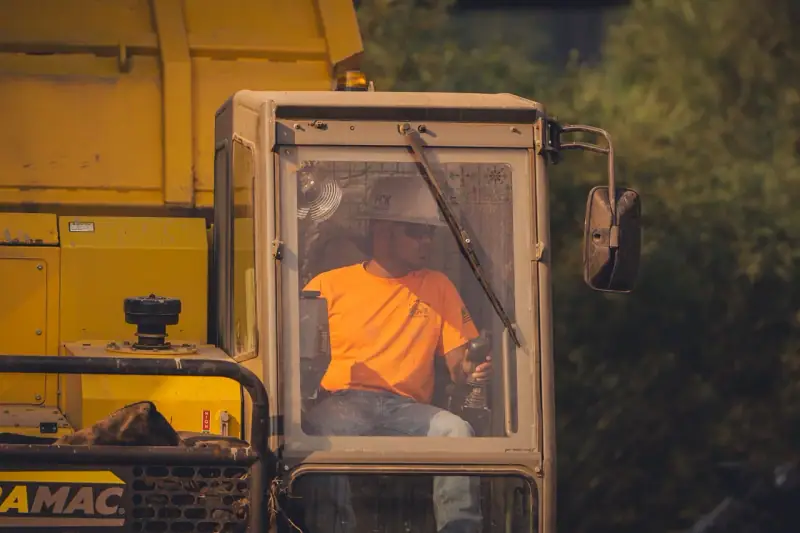
Your people and your machines at work. The images that make a company feel real to a client or a future hire.
Scale and site context from above, flown where the site and the airspace allow it.
Contractor photography has two jobs. It keeps a clean record of the work, and it gives you proof to win the next project. Most contractors only get one of those, because the photos come from a phone on the way to the truck.
We plan the coverage the way a job is planned. The site before work starts. The work that is about to get buried or covered: footings, drainage, utilities, framing, and waterproofing. Construction drone photography when the scale only makes sense from above. Then finished work, closeout, and the crew and equipment that got it done.
Everything comes back organized by project and stage, so the right image is easy to find when a bid is due, a page needs updating, or a post needs to go out.
It is not a folder full of random shots. Construction photography at Kiln is planned around the milestones that prove your standard and the questions your next buyer will ask. Every image has a job: show the scale, prove the detail, or introduce the people who did the work.
We photograph the whole arc of a build so the story makes sense to someone who was never on site, and we keep it organized so you can find the right image when a proposal is due.
Consistent angles at the moments that matter, from the first cut into the earth to the final walkthrough. Progress a buyer can actually read.
Architectural photography of the result, lit and composed to show the trim, the transitions, and the details that separate your work from the rest.
Your people and your machines at work. The images that make a company feel real to a homeowner, a GC, or someone thinking about applying.
Builders who want buyers to see what happens behind the walls. Excavation and site work crews whose best work is underground by the end of the week. Concrete, framing, roofing, and finish trades who need proof of the standard they bring. Developers who need progress that partners and buyers can follow.
It is built for established operations with crews in the field. Smaller operations are welcome to ask.
Kiln works like a general contractor for your marketing. One relationship, one plan, and a coordinated crew of specialists in photography, film, web, social, and advertising. No W-2 payroll, no benefits, no equipment to buy, and no new department for you to manage.
Your photographer is not working alone. The same plan guides the film crew, the website, and your social calendar, so the images are shot for the places they will live. The wide shot for the website header, the detail for the case study, the crew portrait for the hiring page.
We understand the jobsite. We read a schedule, respect the safety plan, and know which moments will not come back. Our founder grew up in the construction world and still notices the trim, the baseboards, and the floor transitions that prove the craft. That eye shows up in every frame.
Every engagement starts with the buyer. Who needs to see this work, and what do they need to believe before they call? A homeowner choosing a custom builder looks for care and finish. A GC vetting a site work sub looks for capacity, safety, and a clean handoff. A developer looks for a team that holds a schedule. The shot list follows the answer.
From there we map the milestones on your schedule, choose the angles we will repeat through the build, and decide which moments deserve film as well as stills. When the photographer, the filmmaker, and the web specialist plan together, one site visit covers what three separate vendors would each charge you for.
After every visit we edit, caption, and organize the images by project and stage. When a proposal is due or a buyer asks how you handle a tricky foundation, the proof is a search away instead of buried on somebody's phone.
A library of credible proof your next buyer can understand. Stronger proposals, a website with real project stories, and a social presence built from your own work instead of stock images.
Over time, the photographs become the record of how you build. That record is what earns trust before the first conversation and what sets your price apart from the lowest bid.
Your photographer is not working alone. The same plan guides the film, the website, and the social calendar, so every image is shot for where it will live: the wide shot for the website, the detail for the case study, the crew portrait for the hiring page.
Share the schedule and point us at the jobs you want more of. We plan the milestones, show up when they happen, and deliver edited images organized by project and stage, so the right photo is a search away when a bid is due.
At the milestones that matter for that build, such as site work, foundation, framing, envelope, and finish. We set the plan with you based on your schedule and what your buyer needs to see.
Usage is set in writing before we start, so you know exactly how you can use every image across your website, proposals, social channels, and ads.
It is photography planned around how a contractor actually works and sells: the site before work starts, the work that gets covered up, drone views for scale, finished work, and the crew and equipment. It serves as a project record and as marketing for the next job.
Yes. Drone and aerial coverage can be added to any project or monthly plan. It is the clearest way to show the scale of site work, civil work, and large builds.
It is planned photography of a project at key milestones, shot from consistent angles so the progress is easy to follow. It proves the hidden work and creates before and after comparisons.
Yes. Finished work is part of the story, photographed to show the craft and detail, with timing and permission coordinated with you and the owner.
Yes, where the site and the airspace allow it. Aerial images show scale and site context that ground photos cannot.
No. We work around real production, follow your site rules, and stay clear of active work.
Construction video production for Montana builders and trades.
WebContractor website design for Montana builders and trades.
SocialConstruction social media marketing for Montana contractors.
AdsContractor advertising for Montana builders and trades.
We take a small number of trades companies at a time, so each one gets our full attention. Applications are read personally by Corey.