

The real cost of a marketing hire versus a specialist crew
Choosing between a full time marketing employee and a specialist agency involves more than comparing a salary to a monthly fee. It is a choice between managing a single generalist or partnering with a crew that brings its own equipment, experience, and infrastructure.
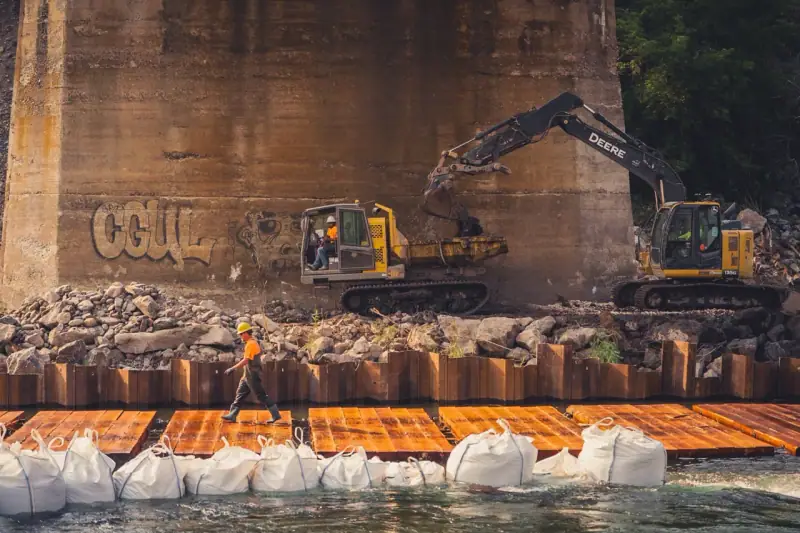
The hidden costs of an internal marketing hire.
When a construction firm considers hiring a dedicated marketing employee, the conversation often starts and ends with a base salary. However, the true cost of an internal hire includes payroll taxes, insurance, retirement contributions, and office overhead. For a builder in Montana, this represents a significant increase in fixed costs that must be carried regardless of whether the firm is in a heavy building phase or a slower planning period. The point is not that employment is a bad choice. It is that compensation belongs in a complete budget, alongside the work you expect the role to deliver.
Beyond the basic compensation, a marketing employee requires an infrastructure to be effective. This includes computer hardware, professional software subscriptions for design and video editing, and specialized equipment like cameras and lenses. If the firm does not provide these tools, the employee is limited to what a mobile phone can capture. If the firm does provide them, it takes on the burden of maintaining and upgrading expensive technology that depreciates quickly. The cost of the person is only the beginning of the investment required to reach a professional standard.
Management time is another frequently overlooked expense. A marketing coordinator needs direction, feedback, and professional development to stay current with industry trends. For a business owner or a project manager, this means adding another direct report to a schedule that is already strained by jobsite demands and client meetings. If the owner does not have the expertise to manage a creative professional, the employee may spend months learning by trial and error on the company dime. This learning curve is a real cost that impacts the bottom line through lost opportunities and inefficient execution.
The capacity problem and the generalist trap.
Marketing for a modern construction company requires a wide variety of distinct skills. You need a strategist who understands the Montana market, a writer who can explain technical building processes, a photographer who can handle difficult jobsite lighting, and a videographer who can tell a story through movement. You also need a web developer to maintain the site and a media buyer to manage advertising budgets. It is rare to find all these skills in a single individual, even with years of experience.
When you hire one person, you are often hiring a generalist. They may be excellent at social media but struggle with technical search engine optimization. They might be a talented photographer but lack the ability to manage a complex advertising account. This creates a capacity problem where the employee becomes a bottleneck for the tasks they are not comfortable with, or they produce mediocre work in areas outside their core strength. The result is a marketing presence that feels uneven and lacks the polish of a professional firm.
A specialist crew operates differently by bringing multiple experts to the table. Instead of one person trying to do everything, you get a team where each member is an expert in their specific field. The person filming your project is a professional cinematographer who knows how to capture the scale of a mountain build. The person writing your articles is an experienced editor who understands the terminology of the trades. This division of labor ensures that every part of your marketing system is functioning at a high level. You are not paying for someone to learn how to do their job. You are paying for the accumulated expertise of an entire team that already understands your industry.
Choosing between a full time marketing employee and a specialist agency involves more than comparing a salary to a monthly fee.
Specialists bring their own infrastructure.
One of the primary advantages of partnering with a specialist crew is the immediate access to professional grade infrastructure. A production agency arrives at your jobsite with a complete kit of tools designed for the environment. This includes cinema cameras that can capture the dynamic range of a bright Montana sky and a dark interior, stabilized drones for aerial site documentation, and professional lighting to make finished interiors look their best. A single employee rarely has the budget or the necessity to own and maintain this level of equipment.
The infrastructure extends to the post production process. Editing high resolution video and managing large libraries of project documentation requires powerful workstations and secure storage. When you work with a crew, these costs are baked into the service. You do not have to worry about where your files are stored or how to handle a hardware failure. The specialist team manages the entire lifecycle of your digital assets, ensuring they are organized and ready for use across your website and social channels. This eliminates the need for your firm to manage complex IT requirements for a marketing department.
Investing in assets versus carrying overhead.
Both an employee and a specialist crew can create lasting assets. Compare the system each arrangement actually delivers, not a salary on one side and an ideal outcome on the other. A coordinated crew connects specialist production with strategy, publishing, and ongoing refinement. A professional brand film or a library of high quality project photography has a long shelf life. These assets can be used for years to attract new clients and build authority in the market. They become part of the equity of your business, and an internal employee can also contribute enduring work when they have the right support.
Turnover and continuity belong in the comparison.
When one employee carries the entire system, their departure can interrupt publishing, reporting, and access to working files. Recruiting a replacement, onboarding them, and reconstructing the plan take management time. Ask how accounts, passwords, source files, permissions, and project context will remain with the business. A strong hire can build excellent systems, but continuity should not depend on memory alone.
A specialist crew also needs accountability. Clarify ownership of finished assets, access to advertising and website accounts, approval processes, and who coordinates the relationship. The advantage is a documented shared plan supported by multiple specialists, not an assumption that an outside partner can never lose a person. Compare the handoff and resilience of both models before deciding.
Making the right choice for your firm.
The decision between a hire and a specialist crew depends on the size of your firm and your long term goals. For a small to medium sized builder, the cost of a full time marketing employee is often difficult to justify given the specialized nature of the work. The builder needs high quality visual proof of their craftsmanship, which is exactly what a specialist crew is designed to provide. A partnership allows the builder to compete with much larger firms by presenting a professional and polished image that reflects the quality of their work.
Keep reading. What a Montana builder's marketing calendar should look like
Put it to work.
Reading the plan is one thing. Bring in the crew that runs it. Applications are read personally by Corey.